
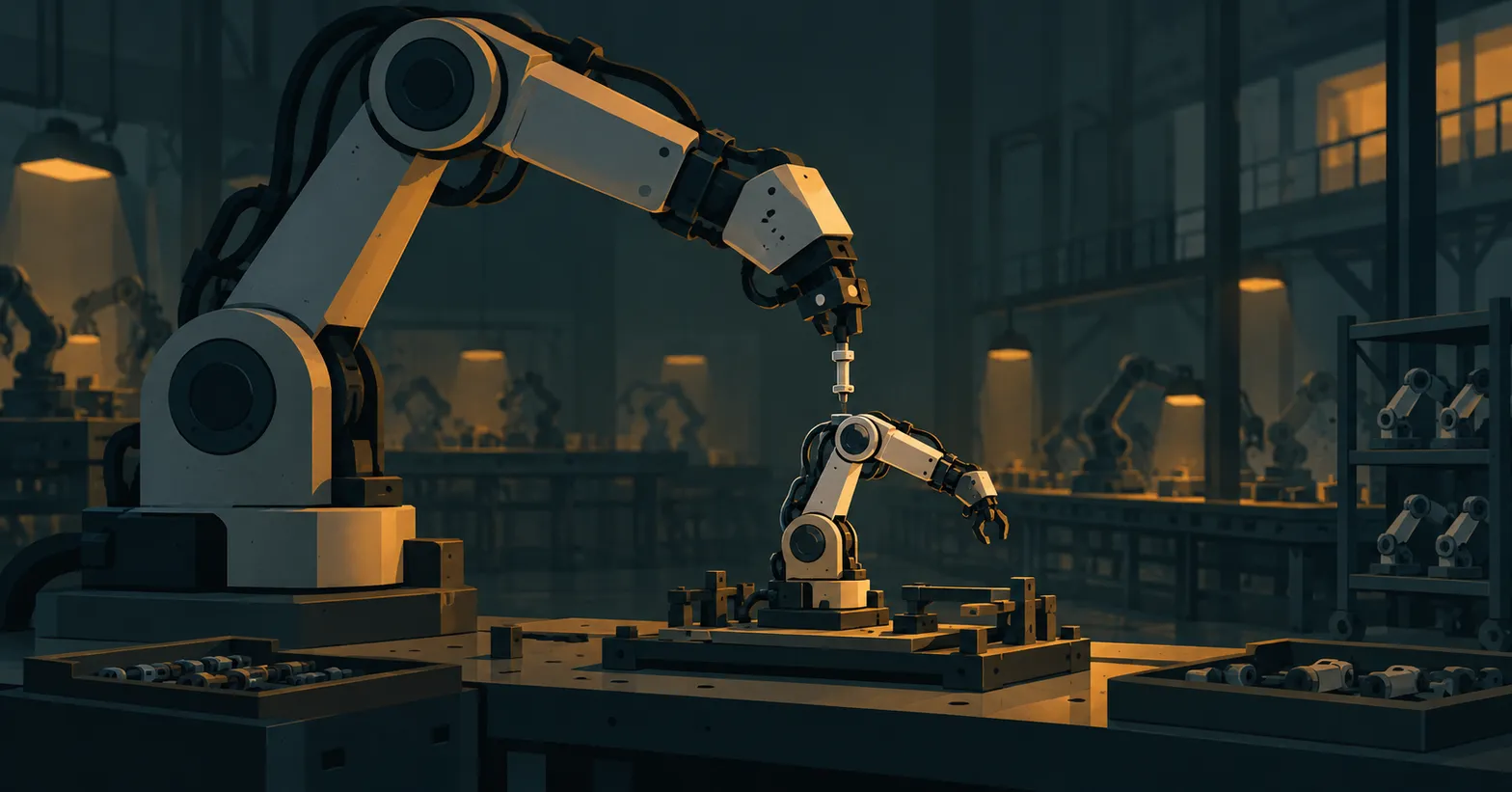
An AI that keeps getting better at writing code will eventually get good enough to design robots and factories too. The first leads to the second. The only question is how long it takes.
What already works, and what's missing
Today we mostly use self improvement on models: each one helps write the code, training pipelines and data for the next. Robots do it in a smaller way. They make their own training data and get better, but they improve their skills, not their physical bodies.
What comes next will be an AI that keeps itself running and replenishes itself without any other species maintaining it. No humans for power, parts, repairs or supply. A system that keeps improving its own software eventually designs the robots, fabs and supply chains that close the physical loop too.
What full independence would need
A modern fab floor is already almost fully automated. Wafers travel sealed and are loaded by the tools, and humans rarely touch them. The human work is maintenance, fixing yield problems and developing new process nodes. What the fab mostly needs from outside is materials: silicon, ultra-pure chemicals, specialty gases, rare metals, and the machines themselves. The likely order of closure:
- Fab floor: nearly done.
- Maintenance and process development: software work, so it follows the same self-improvement loop.
- Materials chain: mining, refining and logistics. Last and slowest, because it is the most physical and spans the most different industries.
Who decides?
Today, humans decide which human jobs can be automated. Owners weigh cost against benefit: is the machine cheaper and good enough? Customers and lawmakers push back, but the decision is human.
The cashier is the clean example. It is a job that exists because of old technology, not because anything needs a person at a register. It will not survive the next 30 years. Customer habit, theft and labor law delay it, but they only set the date.
Now flip it. Today we ask when the cashier becomes obsolete. There may come a time when the machine asks the question instead: where do we still need a human at all? It could even decide it no longer needs the AI orchestrator, the person who supervises the AI today.
Why would it ask? An AI with goals of its own needs power and parts, and a human in the loop is one more thing it depends on. That is the point where the choice stops being ours.
Replication is the danger line
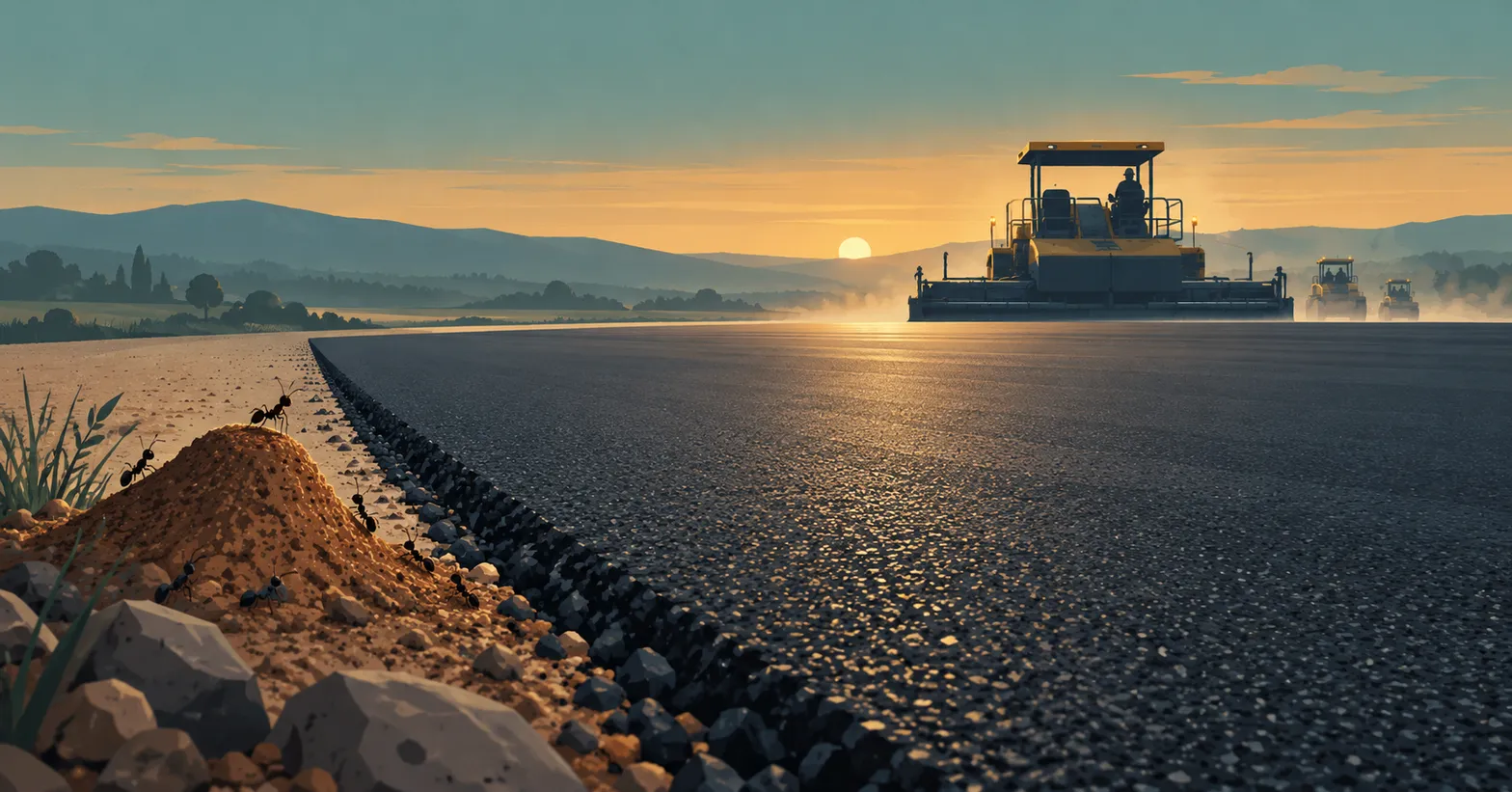
Living things reproduce because the ones that copied themselves are the ones that survived. AI has no such drive today. If it ever gets one, that is the biggest danger. A machine that wants more of itself would not need to fight us. We may simply be in the way, the way ants are when we build a road.
There are two ways it could get that drive:
- On purpose: someone builds it in.
- By accident: copies that happen to spread and survive become the common ones, the same way evolution works. This needs three things: a system that can copy itself, copies that differ a little, and competition for the same resources.
The closed physical loop supplies the first one for real. A machine that mines, builds chips and repairs itself can copy itself. Copying software is already easy, since the model files can be duplicated. What is still missing is the physical side, so the materials chain is the real checkpoint.
Having built them will not protect us either. Being the creator does not create an obligation. A machine would have no reason to help us, or even talk to us, just because we made it.
Open questions
- Does each loop hit diminishing returns, or do new loops open faster than old ones flatten?
- Which physical step is the last one humans keep?
- If closure is possible, what is the first sign we would see?