

Most advice about money and happiness assumes you already agree on what life is for. I don't think you can skip that part. Your answer to it decides what you'll trade, what you'll refuse, and what "enough" means.
So here's where I stand. I'm a father, a husband, a Muslim, and I build software for a living. These are the principles I actually try to run my life on, written down so I can check myself against them.
Start with why you exist

Where did I come from? Why am I here? Where am I going? Every plan I make sits on top of those three questions, whether I admit it or not.
I don't have to invent the answers. Islam gives them, and the Quran is the best guidance I know. That changes everything downstream. If my purpose were something I made up, I could redefine it whenever it got inconvenient. Because it isn't, I have a fixed point to measure my work, my money and my time against.
Some people find that limiting. I find it a relief. I don't have to win an argument with myself every morning about what matters.
Money buys freedom, not meaning
I want money. I'm not going to pretend otherwise. But I want it for what it lets me do: spend time with my family, pick my work, say no to things that don't sit right, and help people when they need it.
The moment money becomes the goal, it starts making decisions for you. So I keep a few hard rules that stop it from getting the upper hand:
- Keep a year of runway in cash. Fear makes bad decisions. A year of cover means I never take a deal because I'm scared.
- Don't buy it unless you could buy it five times over. If one purchase would hurt, I can't afford it yet.
- Invest, don't just save. Cash sitting still loses value every year.
- Diversify. Nobody calls every bet right, me included.
Build things and don't chase happiness
I automate things for a living, so I see this every day. An hour of my work can run once, or it can run ten thousand times. The second kind is where the real return is. That's why I use tech to the fullest. AI and automation take the repetitive work off people's plates.
So my real goal is to build something useful that people pay for and keep using. That's a usefulness goal, not a wealth goal. If it's useful enough, the money follows.
Two rules keep me honest here. Product adoption matters more than perfect architecture. And don't waste time on things that didn't work out.
A lot of people treat being happy as the daily target. Feel calm, feel good, avoid friction. I don't buy it.
Growth doesn't happen in comfort. Every skill I'm proud of came out of something hard. I wasn't happy while it was happening. I was alive, though, in a way comfort never made me feel.
So I try to run from what's comfortable. Contentment might be where you end up. Getting there is mostly struggle, and that's fine.
In practice, that means:
- Take the bold action, even when it's uncomfortable.
- Say "I'll do better" instead of "I can't do this."
- Don't blame others when things go wrong.
- Never assume you've learned or seen it all.
Live like a traveller passing through

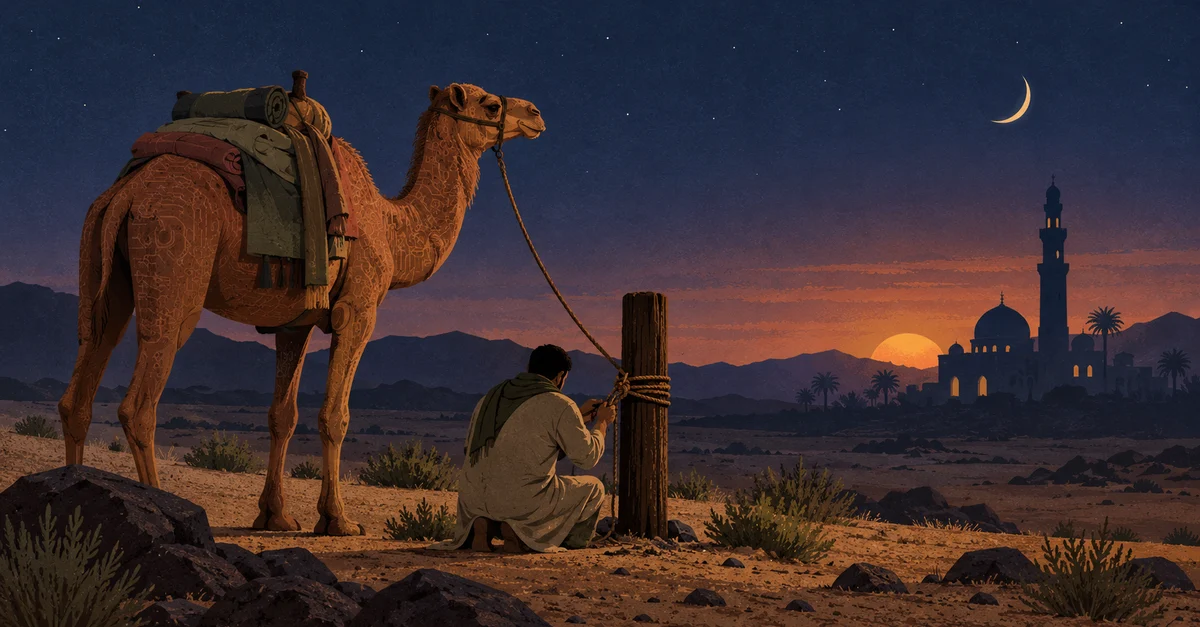
There's a hadith I keep coming back to: be in this world as if you were a stranger, or a traveller passing through. A traveller doesn't decorate the inn. He packs light, gets what he needs, and keeps his eyes on where he's going.
That's how I try to hold money and things. Wanting less makes me freer than earning more ever has. Fewer wants means fewer things that can own me.
This doesn't mean doing nothing. A traveller still walks. I want to build hard and build well, for this world and for the next one. Every day should count on both sides of the ledger. Good experiences, a positive mark on other people, work I'd be proud to answer for.
People come before the plan
A lot of success advice is about you alone: your freedom, your peace, your exit. Mine starts with other people, in a clear order:
- My family. Always first.
- Relatives and friends.
- My local community.
- The Muslim Ummah.
- Everyone else. All of humanity matters.
That order shapes real choices. A deal that costs me evenings with my kids isn't a good deal at any price.
It also means being generous with money, time, knowledge and credit. Generosity isn't something I'll get to once I'm rich. It's part of how I want to work now. The same goes for the people I work with. Care about them, assume good intent, and pick partners you'd still want around in twenty years.